The route, stop by stop
A big loop through the old centre that starts and ends near Centraal Station. East first, through Chinatown and the old Jewish quarter to the Plantage; back across the centre to the grand canals and the Amstel; then north up Rokin to Dam Square and the Damrak as the light goes, finishing in the lit canals of the old centre at night. The film opens with a short preview, and the walk begins at 1:26. Tap a time to jump to that moment.
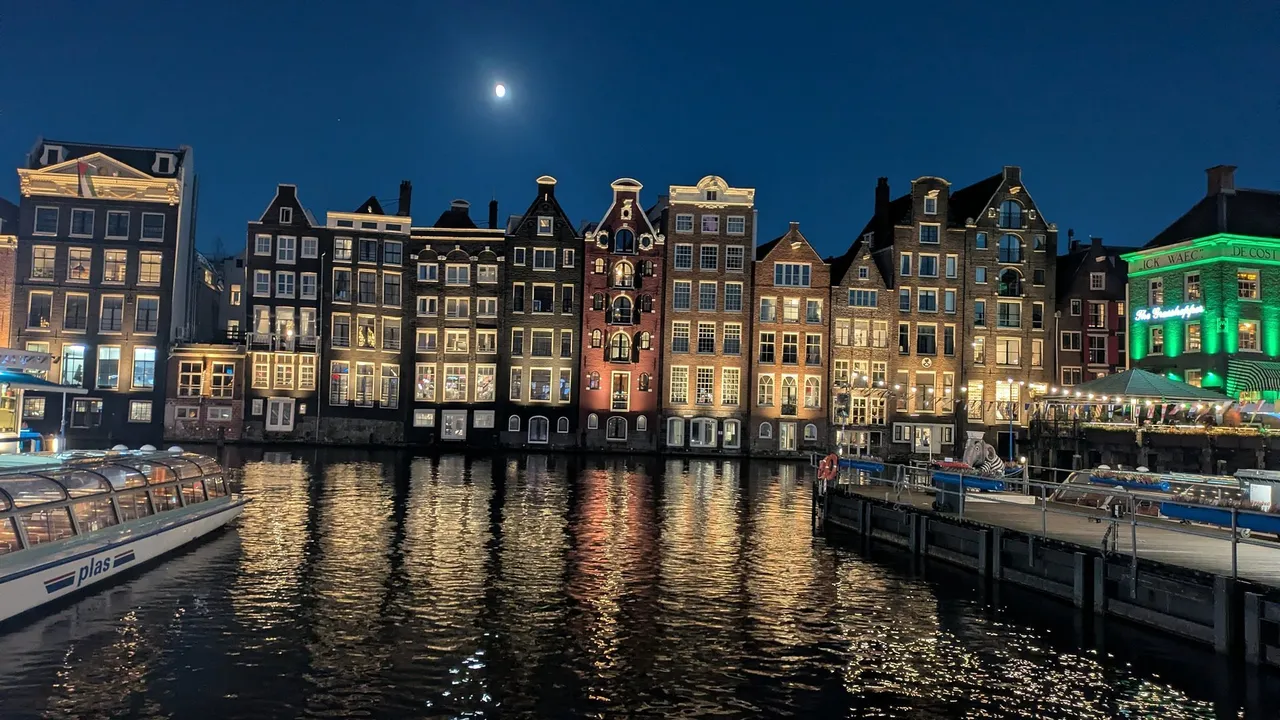
- The Damrak and the "dancing houses"Crooked 17th-century canal houses leaning over the water, a few minutes from Centraal Station.▶ 2:11
- Zeedijk and ChinatownOne of the city’s oldest streets, now Amsterdam’s small Chinatown, with a Buddhist temple on the way through.▶ 7:07
- Nieuwmarkt and De WaagA 15th-century city gate turned weigh house, standing alone in a café-lined square.▶ 9:42
- JodenbreestraatThe heart of the old Jewish quarter. Rembrandt lived and worked here; his house is now a museum.▶ 12:57
- Café De SluyswachtA leaning 17th-century lock-keeper’s house on the water, now a bar. One of the most photographed buildings in the city.▶ 32:17
- Hollandsche Schouwburg, the PlantageA former theatre used as a deportation centre in the Second World War, now a memorial.▶ 38:47
- The Bushuis, old VOC headquartersBuilt for the Dutch East India Company on the Kloveniersburgwal, now part of the University of Amsterdam.▶ 53:27
- Hoist beams and leaning housesLook up: the beams under every gable were, and still are, how furniture gets in through the windows.▶ 1:00:52
- A WWII memorialPassed on the east side of the centre, on the way to the grand canals.▶ 1:13:47
- Herengracht’s Golden BendThe stretch of the Herengracht where the richest merchants built the widest houses.▶ 1:21:47
- Magere Brug, the Skinny BridgeThe white wooden drawbridge over the Amstel, lit with bulbs at night.▶ 1:27:27
- RokinThe wide street back toward the centre, past the Rokin metro station.▶ 1:47:42
- Dam SquareThe Royal Palace, the Nieuwe Kerk and the National Monument, as the afternoon light goes.▶ 1:55:37
- Kalverstraat, then the Damrak at blue hourThe main shopping street, then back up the Damrak just as the lights come on.▶ 2:03:47
- The free ferries across the IJBehind Centraal Station, where free ferries carry people and bikes to Amsterdam-Noord.▶ 2:30:32
- The old centre at nightLit canals and pubs, finishing on a bridge over the Oudezijds Achterburgwal.▶ 2:50:22
Open this route in Google MapsWalking directions from Amsterdam Centraal through the main landmarks. Our film takes a few extra turns.
Why we timed it for blue hour
Amsterdam changes in the half hour after sunset. The sky goes deep blue, the bridges light up one by one, and every window along the canals turns gold. We planned the walk so the quiet residential canals came in daylight and the busy centre, Dam Square and the Damrak, came right as the lights came on.
Amsterdam has a long history with lamplight. It was one of the first cities in Europe with public street lighting: in 1669 the painter and inventor Jan van der Heyden was put in charge of a city-wide system of oil lamps, and his design stayed in use until 1840. The film reaches that story at 2:37:27.
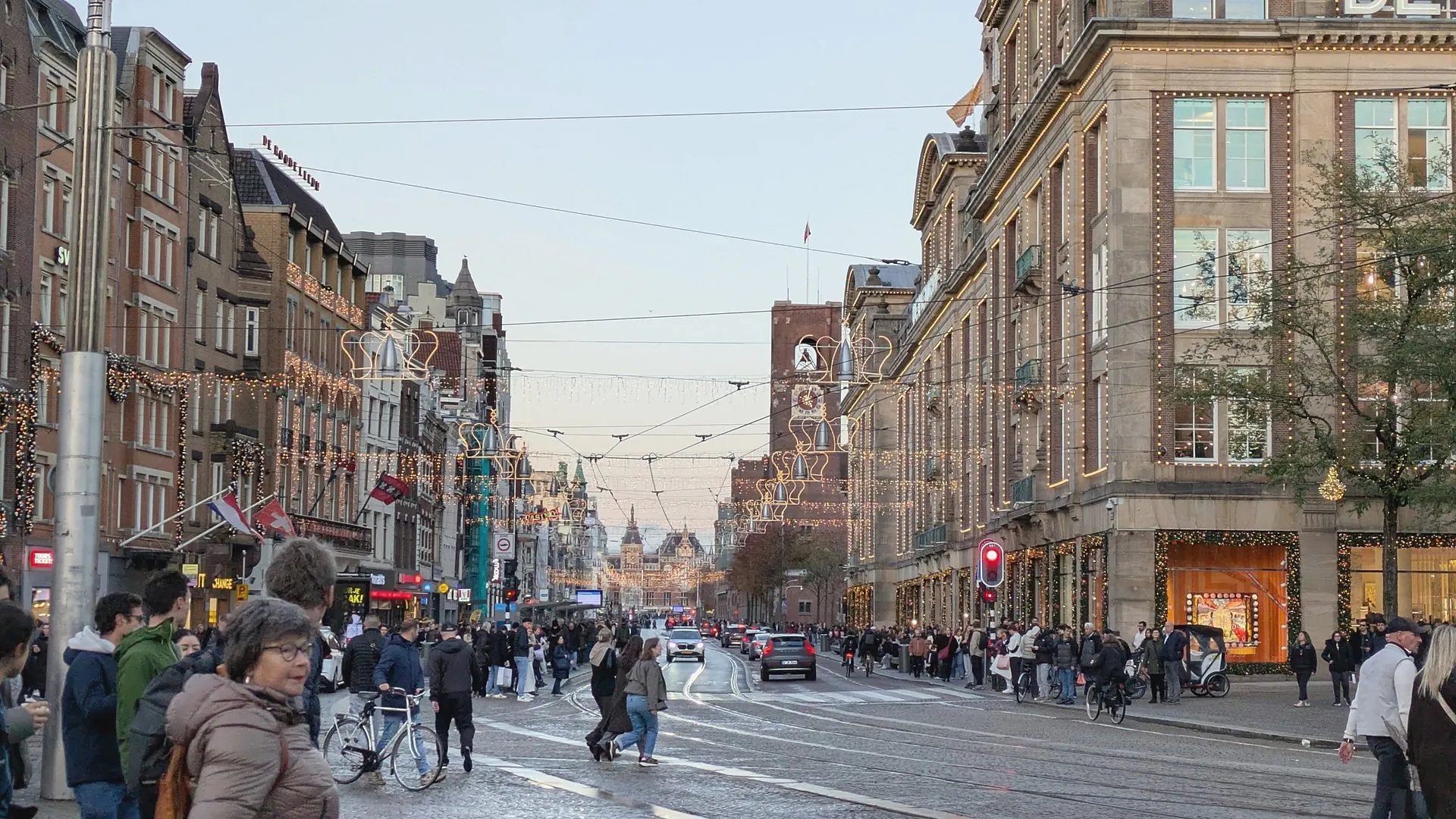 The Damrak as the lights come on.
What the camera doesn’t tell you
We had the whole thing planned on a map the night before: two neat loops, Dam Square and the Royal Palace first, then Rembrandt’s house, the Portuguese Synagogue and the smallest house in the city, finishing at the Skinny Bridge. Amsterdam had other ideas. It was a cool, grey Saturday at the start of November, the city was full, and the plan lasted about five minutes.
We’d left our base in Belgium just before ten that morning, stopped once for fuel near Breda, and were parking at the Oosterdok garage by the station a little after one. So we started where almost everyone arrives, at Centraal Station, and within five minutes we were looking at the crooked houses on the Damrak that seem to lean on each other for support. ▶ watch at 2:11
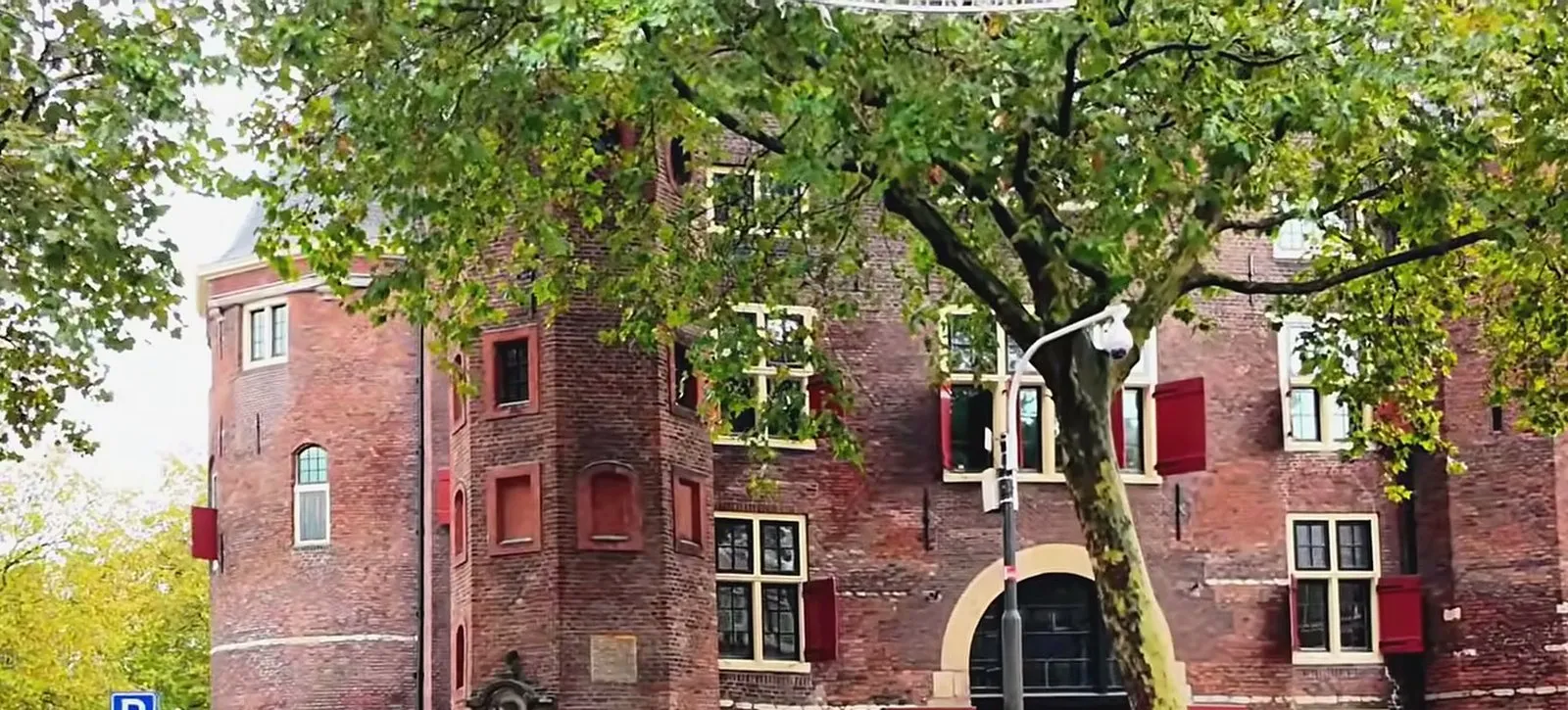 De Waag on Nieuwmarkt, about ten minutes into the film.
The east side of the centre surprised us most. Most visitors never get past the Damrak and the canal ring, but the old Jewish quarter around Jodenbreestraat, Rembrandt’s street, is where the city’s history gets heavy. Out in the Plantage, the Hollandsche Schouwburg is a theatre that became a deportation centre in the war; it’s a memorial now, and the street goes quiet around it. ▶ watch at 38:47
On the way back the mood lifts. The Dutch have a word for what you see through the café windows on an autumn afternoon: gezellig. It means something like warm and sociable, and English has no single word for it. ▶ watch at 44:47 We walked past the herring stand and the jenever tasting room without stopping, which we regret a little.
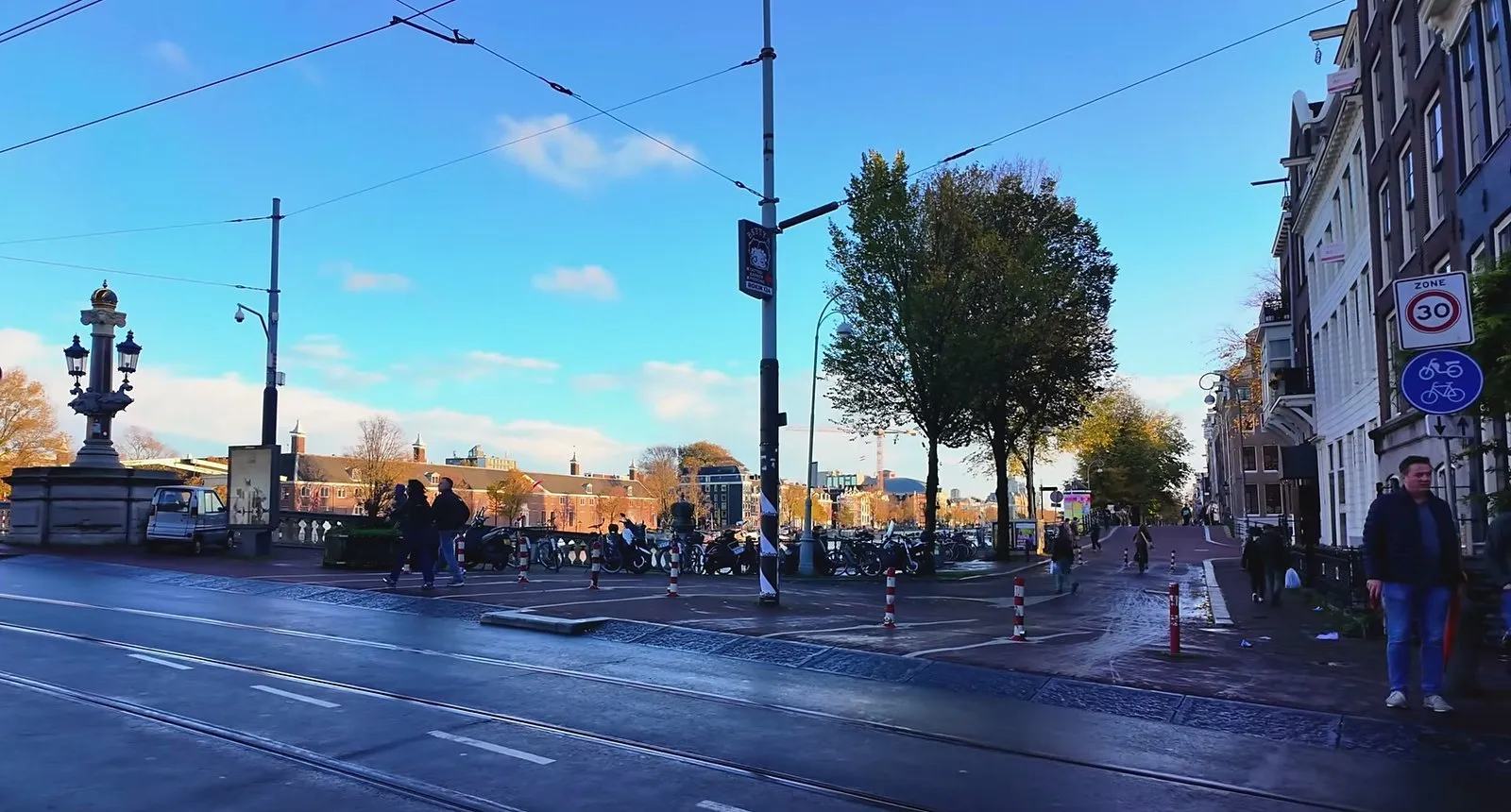 Golden hour near the Amstel, about 1 hour 22 minutes in.
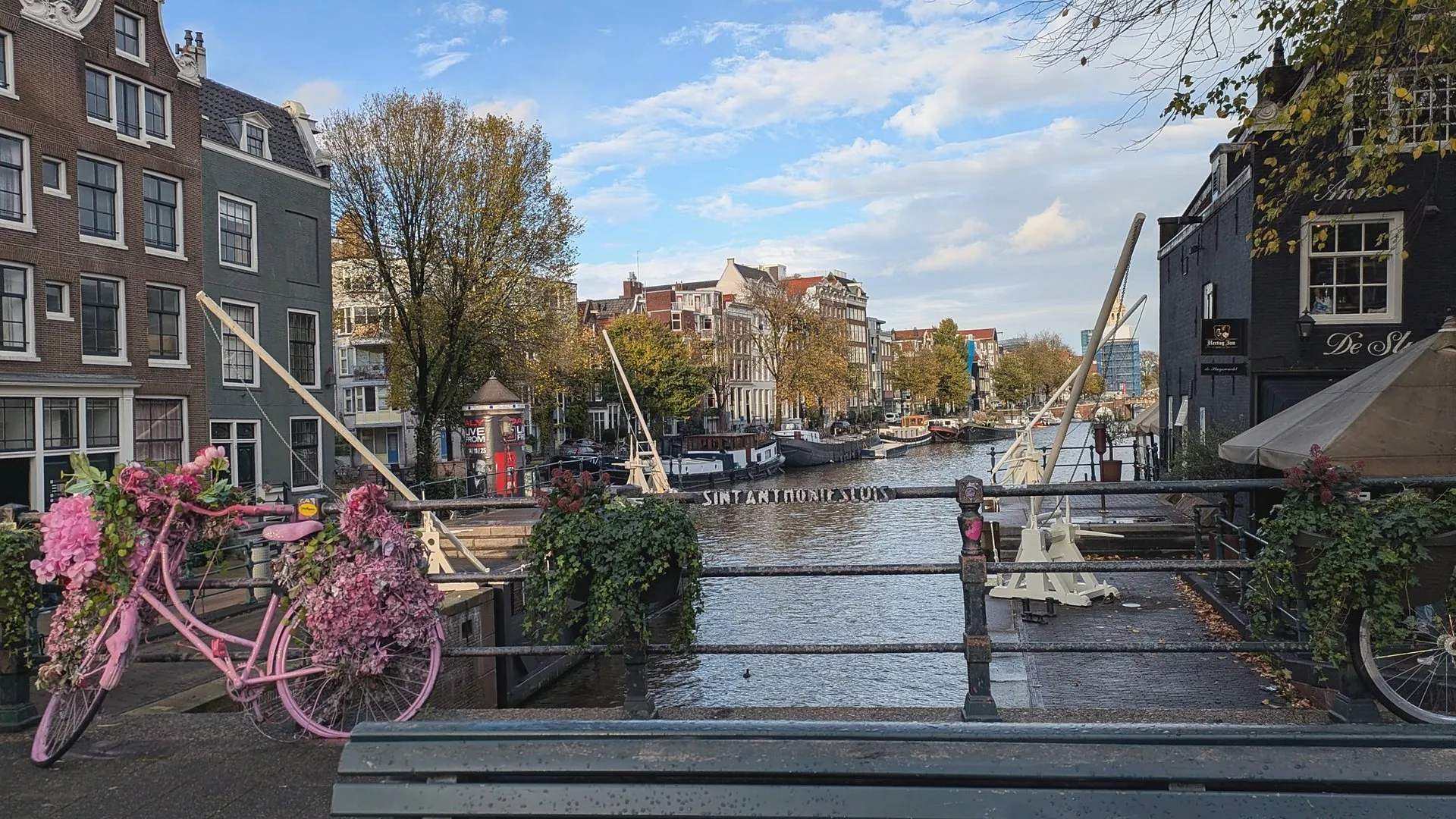 A flower bike chained to a canal bridge.
By Dam Square the light was going. We walked up the Damrak as it turned blue, stood behind Centraal Station watching the free ferries cross the IJ like moving bridges full of bikes, and finished in the lit canals of the old centre at night, on a bridge over the Oudezijds Achterburgwal. Three hours, one walk. ▶ watch at 2:20:29
How to walk Amsterdam
- Start two to three hours before sunset.That gives you the quiet canals in daylight and the centre at blue hour. We were on foot from about 1:15 pm, which was earlier than we needed. In early November the sun sets around 5 pm, and blue hour follows for about half an hour.
- Watch for bikes, not cars.The red paths are bike lanes, and cyclists won’t stop. Look both ways before stepping off any curb.
- Go east of the canal ring.Nieuwmarkt, Jodenbreestraat and the Plantage are calmer than the centre and full of history most visitors miss.
- Take the free ferry at the end.The ferries behind Centraal Station to Amsterdam-Noord are free and run every few minutes. The Buiksloterweg route runs through the night.
- Driving in? Park once and walk.We drove up from Belgium and left the car at the Oosterdok garage by Centraal Station for the whole walk. Central parking is expensive; the city’s P+R car parks on the edge, with a public transport ticket into town, are the cheaper option.
- Bring a layer in autumn.It was cool and grey when we walked, and it gets cold fast once the sun goes.
What it costs
| This walk: the canals, squares, bridges and streets | Free |
|---|---|
| The ferry across the IJ to Amsterdam-Noord | Free |
| Rembrandt House Museum, if you go in | €23.50 (€19.50 from 4 pm) |
| Haring or a jenever on the way | We walked past |
| Our private room in Belgium, north of Brussels | $80.61 a night |
The walk itself cost us nothing; the day’s costs were the drive and parking. Museum prices change, so check official sites before you go.
Where to stay for this walk
We didn't sleep in Amsterdam at all. We were based in a private room north of Brussels, $80.61 a night, and drove up for the day, about three hours each way. It was a long one: out the door before ten, home after ten at night. If you'd rather stay in the city, this loop starts and ends near Centraal Station, so anywhere central works:
Budget tip: Amsterdam hotels are expensive. Staying a short train ride out and arriving at Centraal, the way this walk begins, can save a lot.
Worth paying to go inside
- Rembrandt House MuseumRembrandt’s home and studio on Jodenbreestraat. €23.50, or €19.50 from 4 to 6 pm.Official site ↗
- Our Lord in the AtticA whole Catholic church hidden in the attic of a canal house, from when Catholics had to worship in secret. Check prices at opsolder.nl.Official site ↗
- The Royal Palace on Dam SquareBuilt in the 1600s as the city hall. Check opening days; it closes for royal events.Official site ↗
Questions people ask
How long does it take to walk around Amsterdam’s old centre?
Our film is just under three hours of walking, start to finish, and it covers the old centre, the east side and the Golden Bend. Our phone logged 5 miles (8 km) on foot that day between about 1:15 and 6:40 pm, breaks included. Allow a full afternoon with stops.
When is the best time to walk Amsterdam?
Late afternoon into blue hour. You get the canals in daylight and the bridges and windows lit up at dusk, which is when the city looks its best.
Are the ferries behind Centraal Station really free?
Yes. The GVB ferries across the IJ to Amsterdam-Noord are free for people on foot and on bikes, and the Buiksloterweg ferry runs through the night.
What is the Magere Brug?
The Skinny Bridge, a white wooden drawbridge over the Amstel, lit with hundreds of bulbs at night. It’s on this walk at 1:27:27.
Can you do Amsterdam as a day trip from Belgium?
Yes. We drove up from north of Brussels, about three hours each way with a fuel stop, parked by Centraal Station and spent five and a half hours on foot. Trains from Brussels and Antwerp take a similar time.
Is Amsterdam’s Red Light District safe to walk through?
The old centre around the Oudezijds canals is busy and well lit at night. Mind your belongings in crowds, and don’t photograph the windows.
Facts and prices checked October 2026. Opening hours and ticket prices change, so check official sites before you go.